
Prague Astronomical Clock facts at a glance
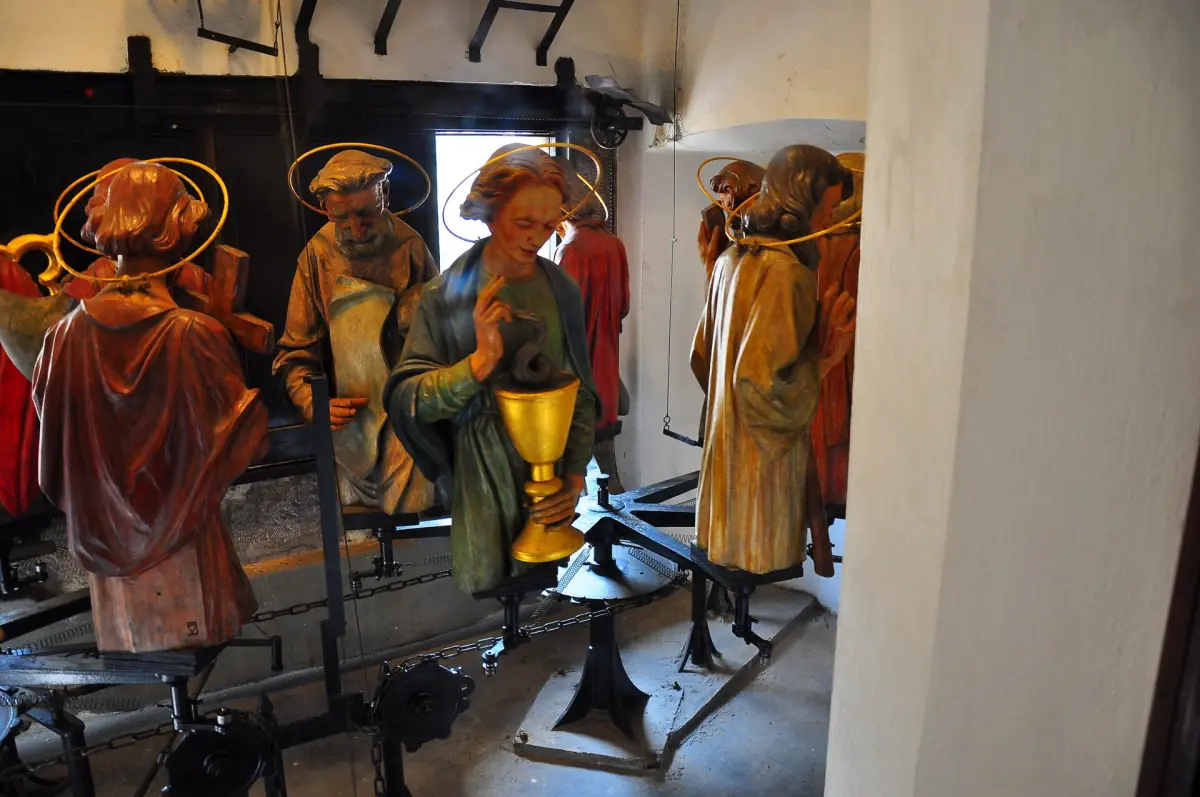
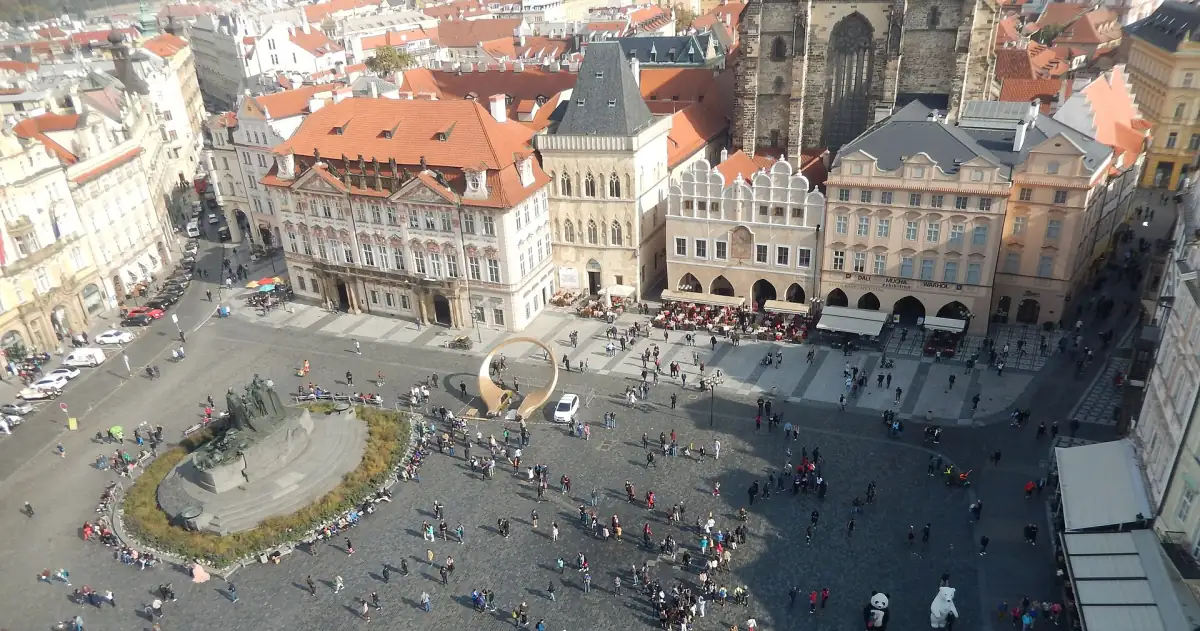
The Prague Astronomical Clock, the Orloj, sits on the south side of the Old Town Hall tower on Old Town Square. It dates back to 1410 and has two main parts: an astronomical dial above and a calendar dial below. Twelve apostles appear in the windows above the dial during the hourly show.
The facts below are grouped by theme. For the full story behind the dates, see the history of the clock. To go inside the building, the Old Town Hall and tower tickets page explains what each ticket covers.
Key numbers in one table
Dates and measurements that visitors ask about most.
| Topic | Fact |
|---|---|
| Origin of the clock | 1410, Mikuláš z Kadaně with calculations by Jan Šindel |
| Town hall founded | 1338 (tower 1364, oriel chapel 1381) |
| Apostles | 12, in the windows above the dial |
| Show hours | On the hour, from 8 a.m. to 11 p.m. |
| Tower height | 69.5 m in total, with the viewing gallery at 42 m |
| Calendar dial | Josef Mánes, 1865 to 1866; the dial on the facade is a copy |
| Fire damage | May 1945; clock running again in 1948 |
| Restoration | 2017 to 2018 |
| Tower opening hours | January to March 10 a.m. to 7 p.m., April to December 9 a.m. to 8 p.m., daily |
| Basic ticket, adult (2026) | CZK 350 at the desk, CZK 450 online with skip-the-line (tower only) |
The tower is 69.5 m high, but the viewing gallery is at 42 m. These are two different numbers. The lift costs extra, so check the tower page before you plan the climb.
Our pick: a low-cost Old Town walk
Our take: three hours with a certified guide at a low price, with the clock on the route.
Hand-picked tours, booked through GetYourGuide. Prices are indicative starting prices in euros (as of October 2026). Tap a tour for live availability and the current price in your currency.

Tours and tickets for the Old Town Hall area
Old Town walks, underground tours and tower tickets, with live prices and availability.
The dials and the time systems
The clock shows more than the hour.
The upper dial
An astrolabe with Earth at the centre. It shows the positions of the sun and moon, the zodiac and several time scales. Blue stands for day, reddish areas for twilight and black for night.
Different ways of telling time
The Roman numerals and the golden hand show the usual hour. An outer ring with Gothic numerals shows Old Bohemian time, where the day begins at sunset. Babylonian hours divide the time between sunrise and sunset into twelve parts, so they are longer in summer and shorter in winter. A star pointer tracks sidereal time.
The moon
A ball with two colours turns to show the phase of the moon.
The lower dial
The calendar has pictures for the months, zodiac signs and saints' days. The original is kept in a Prague museum, and a copy hangs on the facade.
A full explanation of the hands and rings is on the page about how the Prague Astronomical Clock works.
The figures and the show
Four figures move beside the dial: Death with an hourglass and bell, the Turk with a lute, the Miser with a purse and staff, and Vanity with a mirror. They stand for old moral themes and are not statements about people today.
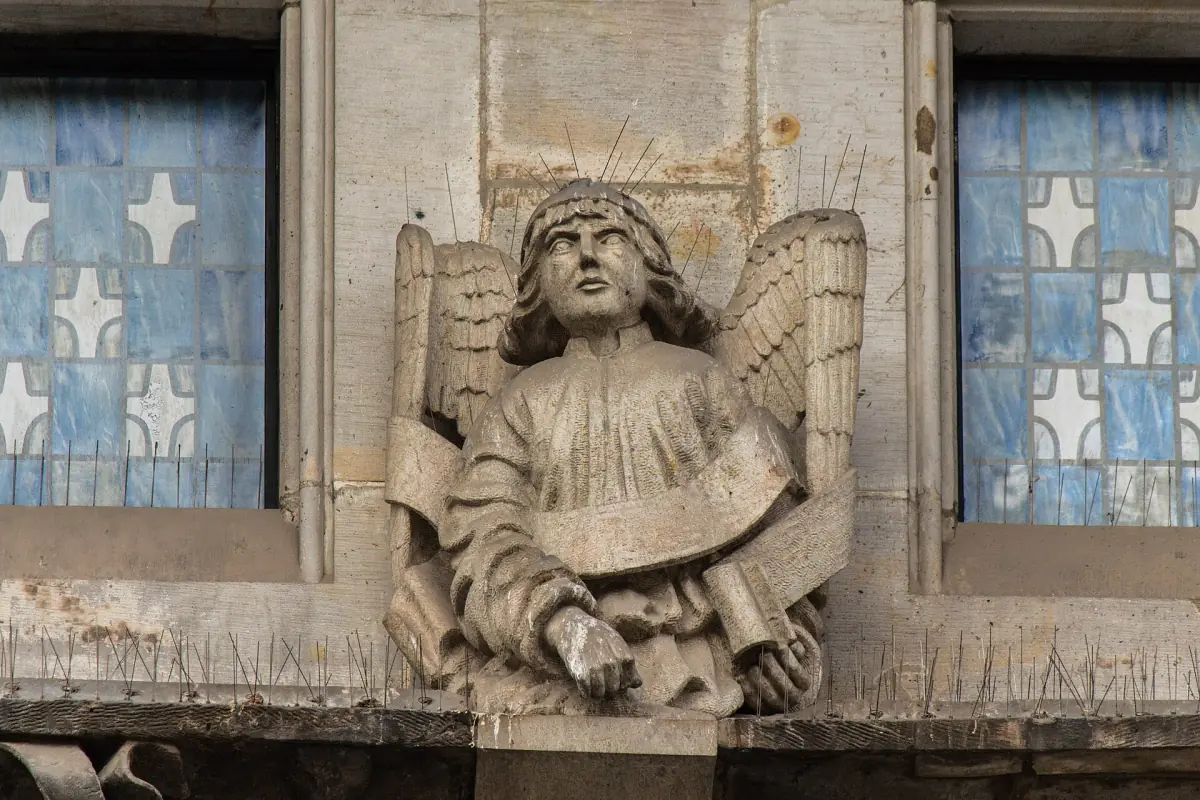
Below the dial stand four fixed figures: the Philosopher or Scribe, the Astronomer, the Chronicler and the Archangel Michael. During the show Death rings, the twelve apostles pass the windows, a rooster crows and the clock strikes. The apostles are only one part of the figures on the facade, so not every statue counts as an apostle.
The show is short, so arrive a little early to find a place. The show times page has the hours and the best way to watch.
Condition, repairs and the digital model
The clock has been rebuilt and restored several times. The apostles are from 1948, after the fire of 1945, and the restoration of 2017 to 2018 returned mechanical parts to their 19th-century form. So the clock is old in origin, not in every part.
A restoration of eight outer figures has been announced for 2026. Check the current state before you visit, as individual figures may be missing. The show itself runs hourly from 8 a.m. to 11 p.m.
Inside the Knights' Hall, an interactive digital model of the clock is included in the basic ticket. It explains the mechanism, but it is not a view of the real works.
Prague Astronomical Clock facts: frequently asked questions
How old is the Prague Astronomical Clock?
It dates to 1410, so it is about 616 years old in 2026 when counted from its origin. That figure refers to when the clock was made, not to the age of every part, since the mechanism and figures have been repaired and rebuilt.
How many apostles are there?
There are twelve. They appear in the two windows above the dial during the show, followed by a rooster and the strike of the clock.
When does the clock perform?
On the hour from 8 a.m. to 11 p.m. The building and the tower have their own opening hours, and the evening shows can take place after the building has closed.
How high is the Old Town Hall tower?
The tower is 69.5 m high in total. The viewing gallery is at 42 m. A lift runs to the top and costs extra on top of the ticket.
Do I need a ticket to see the clock?
No. You can watch the clock and the show from the public square for free. Tickets cover the tower, the Knights' Hall and, as an extra, guided routes through the historic rooms.
Is this the official site of the clock?
No. This is an independent guide, not run by the City of Prague, Prague City Tourism or the Old Town Hall. Prices and hours are shown as examples for 2026, so check them before you go.